
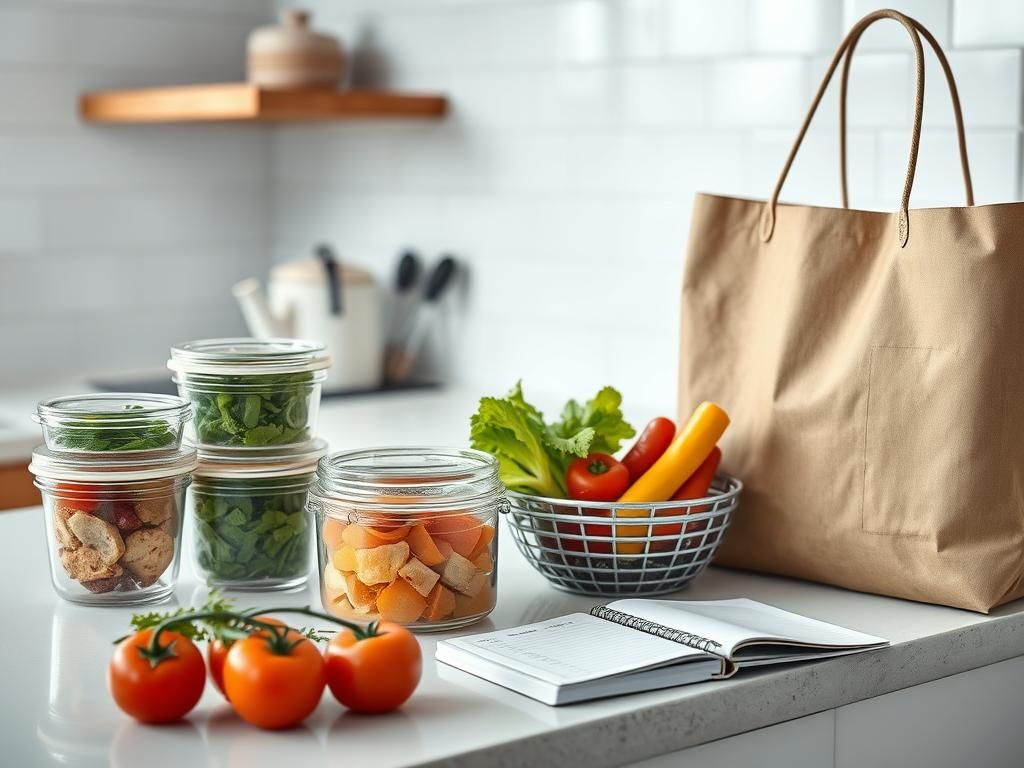
Plan that fits your week
Meal planning becomes useful when it adapts to your actual time, budget, and taste. This guide gives clear steps you can use whether you cook daily, batch cook, or rely on quick meals.
Know your constraints
List how much time you have, how many people you cook for, dietary needs, and your grocery budget. That short list directs every choice that follows.
Build a simple weekly template
Choose 2–3 core proteins you like.
Pick flexible sides: grains, greens, and one versatile sauce.
Assign nights: a fast night, a batch-cook night, a leftovers night.
Shop with intention
Make one consolidated list grouped by store section. Buy items that work across multiple meals to reduce waste and decision fatigue.
Cook smarter
Batch base components: roast vegetables, cook grains, and portion proteins.
Use one-pot or sheet-pan recipes to save cleanup time.
Reserve 20–30 minutes each evening for simple finishing touches to keep meals fresh.
Adjust for different lifestyles
For busy schedules, focus on ready-to-heat meals and versatile frozen staples. For picky eaters, keep mix-and-match components. For special diets, plan substitutes ahead, not on the fly.
Routine and review
Keep a short weekly ritual: check the calendar, update your list, and prep one or two components. Review what worked each week and tweak the template.
Small, repeatable systems reduce stress. Start with a two-week template and simplify as you learn what actually saves time and money.