
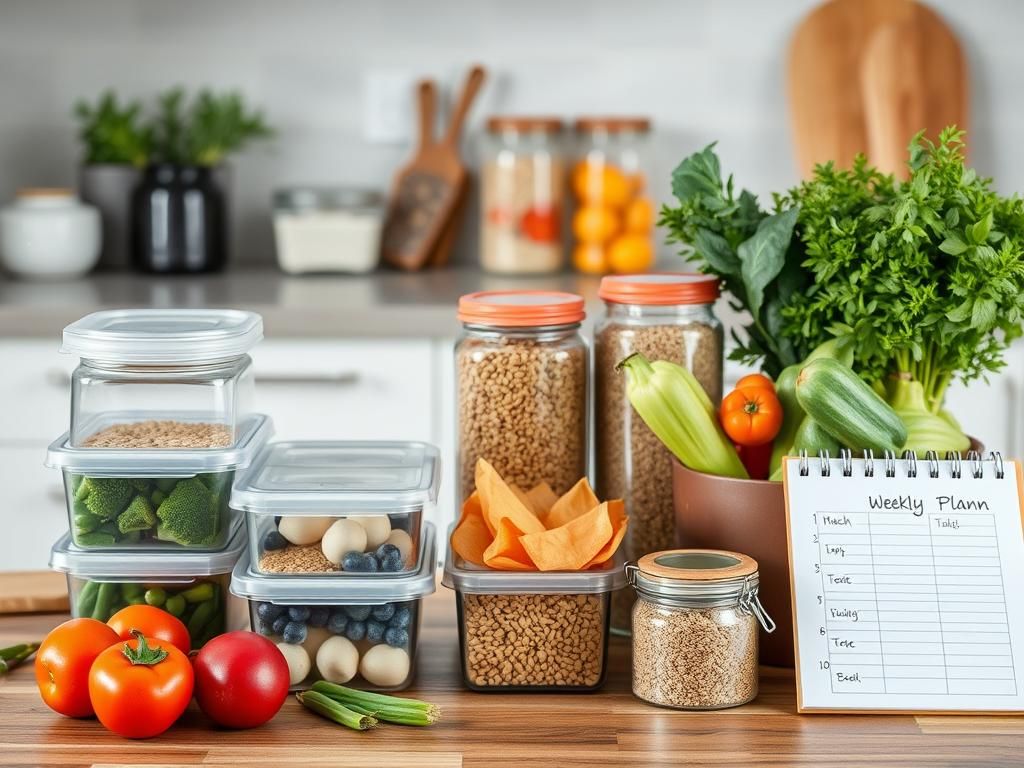
Meal planning doesn't have to be complicated. This guide breaks it into clear steps so you eat better, waste less, and save time.
Why meal planning matters
Planning helps reduce decision fatigue, control portions, and make grocery trips faster. Small habits add up over weeks.
How to start in four steps
- Review your week — note busy days and evenings you can cook.
- Pick reliable recipes — choose 3–5 meals you enjoy and rotate them.
- Build a simple shopping list — group items by category.
- Prep once — chop vegetables, cook grains, or roast proteins for two to three meals.
Weekly template
Use a repeatable structure to simplify choices.
- 2 nights quick-cook (stir-fry, omelet)
- 1 batch meal (casserole, sheet pan)
- 1 slow-simmer or roast
- 1 leftovers or salad night
Pantry and freezer staples
- Whole grains (rice, quinoa, oats)
- Legumes (canned or dried)
- Frozen vegetables and fruits
- Plain proteins (chicken breasts, tofu, canned fish)
- Basic spices, oils, and vinegars
Time-saving tips
- Cook once, use twice: repurpose roast chicken into tacos or salads.
- Batch-cook grains and store portions in the fridge or freezer.
- Use a two-list system: essentials and flexible ingredients for swaps.
Shopping and staying flexible
Buy what’s on sale for the week’s plan and allow one or two swaps based on freshness or cravings. Keep a simple go-to meal for unexpected days.
Final note
Aim for consistency over perfection. Small, repeatable systems make healthy eating sustainable without stress.
Tags
Life Hack