
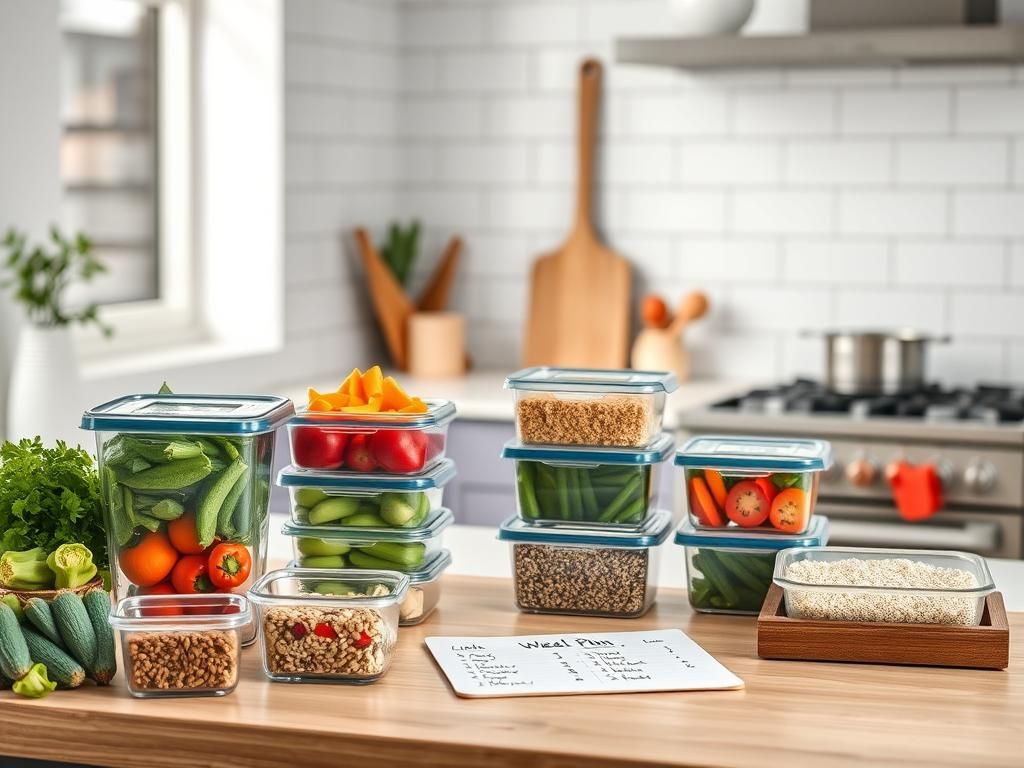
Start with a simple plan
Begin by choosing two or three go-to breakfasts, lunches, dinners, and snacks. Repeating a small set of meals reduces decision fatigue and makes shopping and prep predictable.
Weekly checklist
- Set aside 20–45 minutes once a week to plan meals.
- Check what you already have in the fridge and pantry.
- Create a shopping list organized by aisle or section.
Balance and portions
Aim for plates built from three parts: vegetables, lean protein, and whole grains or starchy vegetables. This keeps meals satisfying and nutrient-dense without complicated counting.
Efficient cooking and storage
Use batch cooking and simple recipes to save time during the week. Cook grains, roast vegetables, and prepare a protein that can be dressed or combined in different ways.
- Cook in batches: one pot of grains, one pan of roasted vegetables, one protein source.
- Store in clear containers and label with dates.
- Portion into meal-sized containers for grab-and-go convenience.
Smart shopping and flexibility
Shop with a list and a flexible mindset. Buy seasonal produce and swap similar items if something is unavailable or on sale.
Quick swaps to keep you on track
- Frozen vegetables instead of fresh when needed.
- Canned beans in place of fresh-cooked legumes for convenience.
- Pre-washed greens to speed up salads.
Review the plan each week and adjust for schedule changes. Small, consistent changes build a healthier routine without adding stress.