
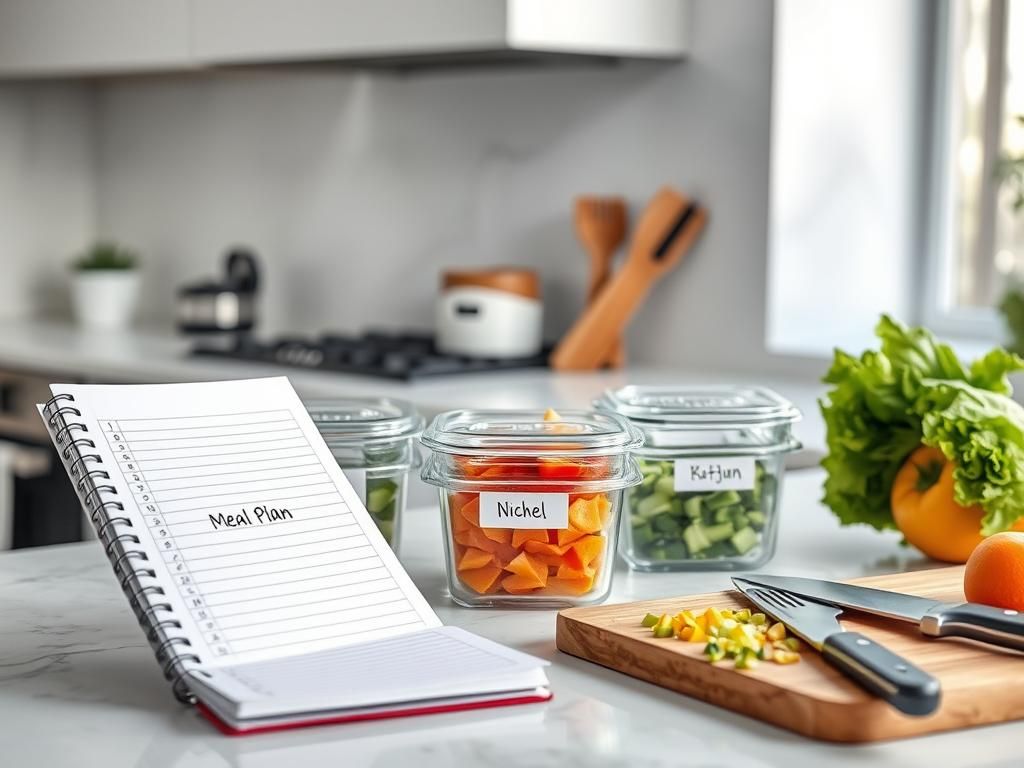
Meal planning made simple
A clear, repeatable system saves time and reduces stress. Use a short routine you can follow every week so planning becomes fast and reliable.
Start with a 20-minute audit
Check your fridge, freezer, and pantry. Note proteins, grains, and fresh produce you already have. This prevents duplicate purchases and helps build meals around what’s available.
Use a lightweight template
Create a one-page plan with:
- 3–4 dinners (rotate themes: grain bowl, pasta, sheet-pan, stir-fry)
- 5 lunches (prepable or planned leftovers)
- Breakfast options (quick staples)
- Snack staples
Batch smart, not excessive
Cook a base component once: roast a tray of vegetables, cook a batch of grains, and prepare one versatile protein. Mix and match these through the week to keep meals varied.
Shop with intention
Turn your plan into a categorized grocery list: produce, proteins, pantry, frozen. Buy only what fits your weekly plan and swap similar items if something is unavailable or on sale.
Small habits that add up
- Set a fixed cook block (60–90 minutes) once or twice weekly.
- Label containers with date and contents.
- Reserve one night for leftovers or an easy takeout backup.
Consistent, simple steps make meal planning sustainable. Start with a 20-minute session, refine the template to your tastes, and treat it as a weekly ritual rather than a chore.