
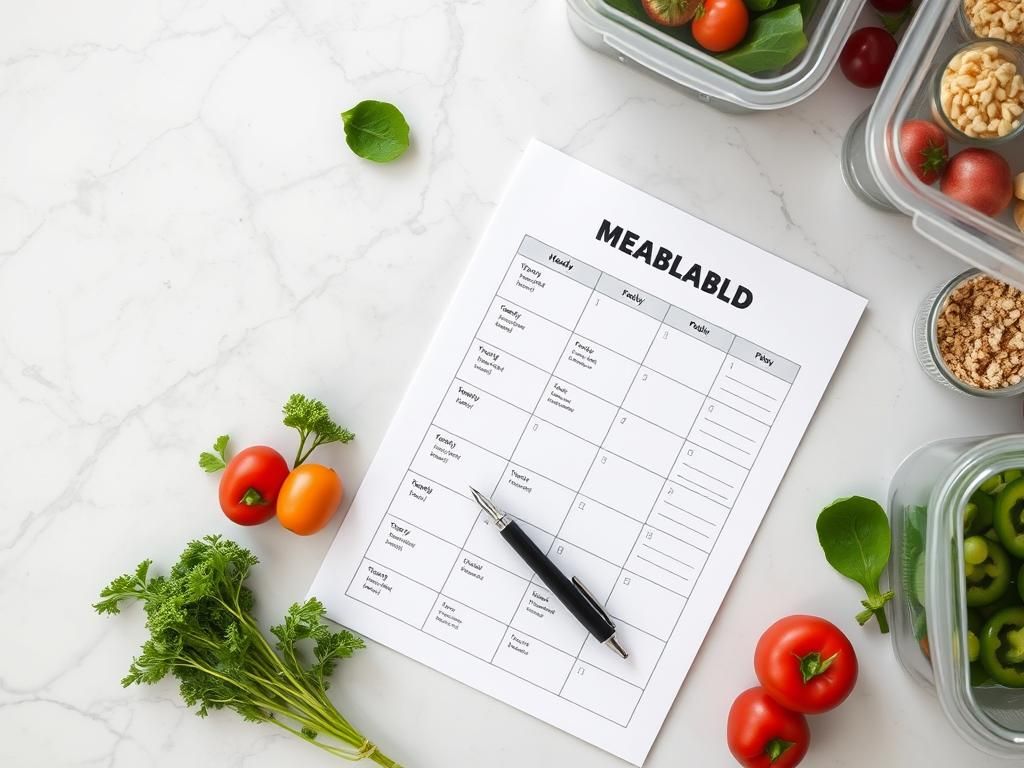
Plan a quick weekly session
Set aside 20–30 minutes to map meals for seven days. Use dinners as anchors and slot breakfasts and lunches around them. Choose two proteins to rotate and keep one night open for flexibility.
Start with a template
Divide the week into simple theme nights (grain bowl, pasta, soup, stir-fry). Themes reduce decisions and make shopping predictable.
Build a practical shopping list
Group items by store section: produce, proteins, pantry. Buy versatile ingredients and commit to one new recipe each week to expand your rotation without overload.
Save time with batch work
Cook staples once: grains, roasted vegetables, and a large protein. Portion into containers for ready meals and easier lunches.
- Cook a base: rice, quinoa or pasta
- Prep two sauces or dressings to change flavors
- Chop vegetables for snacks and quick cooking
Plan for leftovers and flexibility
Reuse dinner components for lunch or re-imagine them as salads, bowls, or sandwiches. Freeze half-batches when you want variety midweek.
Maintain an essentials list
Keep a running list of pantry staples and favorite spices so you can shop efficiently and avoid last-minute runs.
Weekly checklist
- Write the week’s plan down
- Create a shopping list by aisle
- Schedule one batch-cook session
Small, repeatable habits matter more than perfect planning. Try this for one week and adjust items or themes to fit your life.