
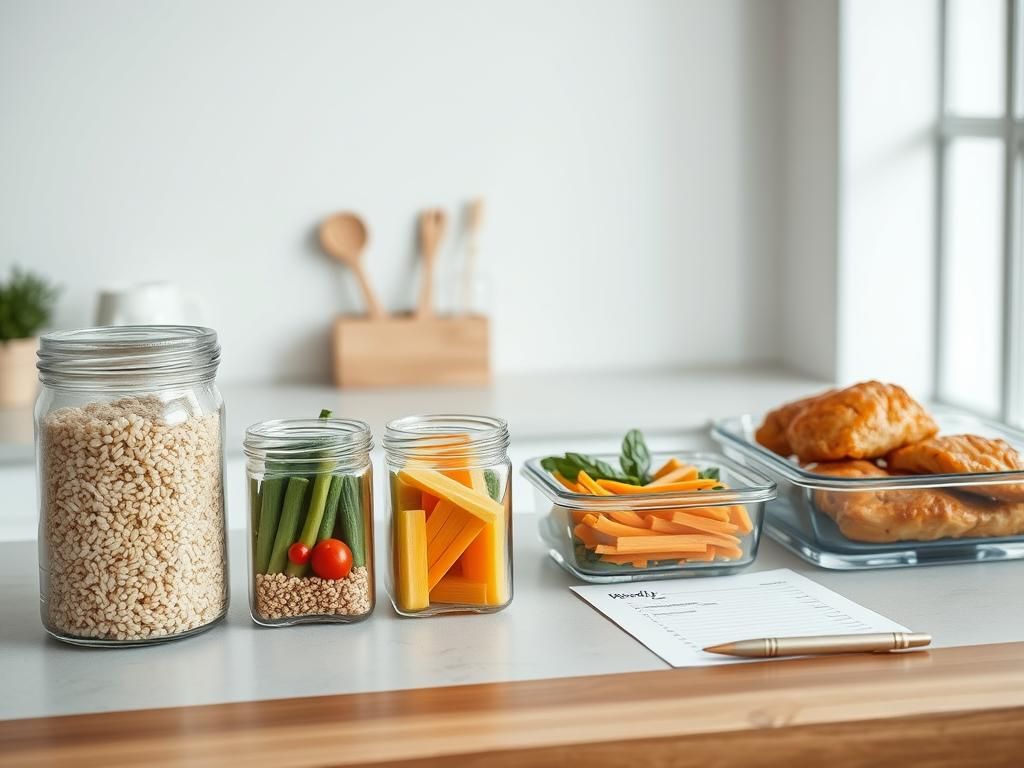
Meal planning becomes manageable when it's a short, repeatable routine. Use 45–60 minutes once a week to cut daily decision-making, reduce waste, and make dinners predictable.
Start with a simple process
Follow three clear steps: check what you have, plan meals around time constraints, and make a single shopping list.
Inventory and schedule
- Look in fridge, freezer, and pantry; note odds-and-ends to use first.
- Mark busy days where quick meals or leftovers are needed.
Plan and list
- Choose 4–6 meals (include two flexible dishes that can change proteins or sides).
- Write a shopping list grouped by store section to save time in the aisles.
- Allocate one batch-cook session (grains/proteins/roasted vegetables) to reduce nightly prep.
Smart shopping and prep
- Buy versatile staples: rice/quinoa, canned tomatoes, frozen vegetables, and a long-lasting protein.
- Prep three components after shopping: a grain, a protein, and a quick vegetable.
- Portion and label containers so grabbing dinner or lunch is fast.
Keep flexibility and simplify swaps
Design meals so components can swap: roasted vegetables with tofu or chicken, grain bowls with different dressings. Use frozen produce to avoid last-minute shopping trips.
Weekly review
- Note which meals you enjoyed and which need tweaking.
- Adjust portion sizes and repeat successful recipes next week.
Small, consistent planning saves time and stress. Start with one predictable planning session and refine the routine to fit your week.
Tags
Life Hack