
Why plan meals
Meal planning reduces decision fatigue, saves time and money, and helps you eat more consistently. This guide gives a simple, repeatable system you can use any week.
Start with a basic framework
Use a three-step structure: choose proteins, pick sides, and schedule leftovers. Keep ingredients that work across multiple meals to avoid waste.
Core steps
Inventory: Check what you already have in fridge, freezer, and pantry.
Select 3–5 meals you can make with overlapping ingredients.
Slot meals into your week based on day-by-day needs (time, activities).
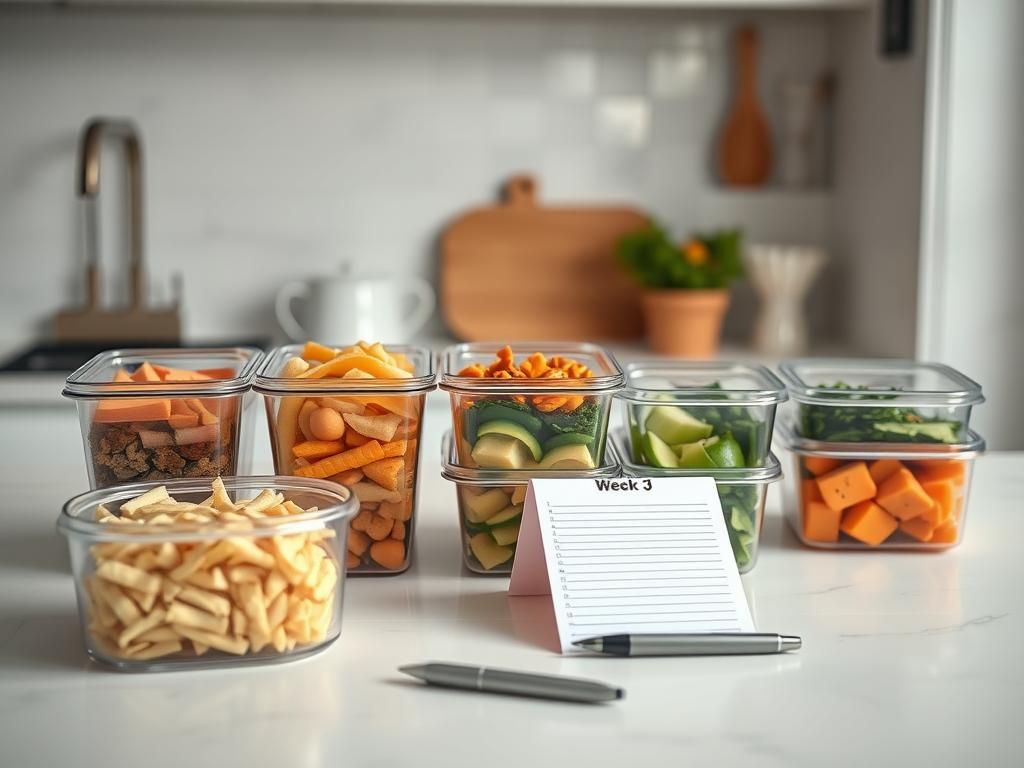
Plan one batch-cook or prep session for grains, proteins, and chopped vegetables.
Practical tips
Theme nights simplify choices: for example, bowl night, sheet pan night, soup night.
Use leftovers intentionally: turn roast into tacos, or grain bowls for lunch.
Keep a short shopping list focused on perishables and missing staples.
Record what worked and what didn’t so planning gets faster each week.
Simple tools that help
A notebook, a shared calendar, or one simple app is enough. The goal is consistency, not complexity.
Final thought
Start small: plan two dinners this week and build from there. A predictable routine reduces stress and makes eating well easier over time.