
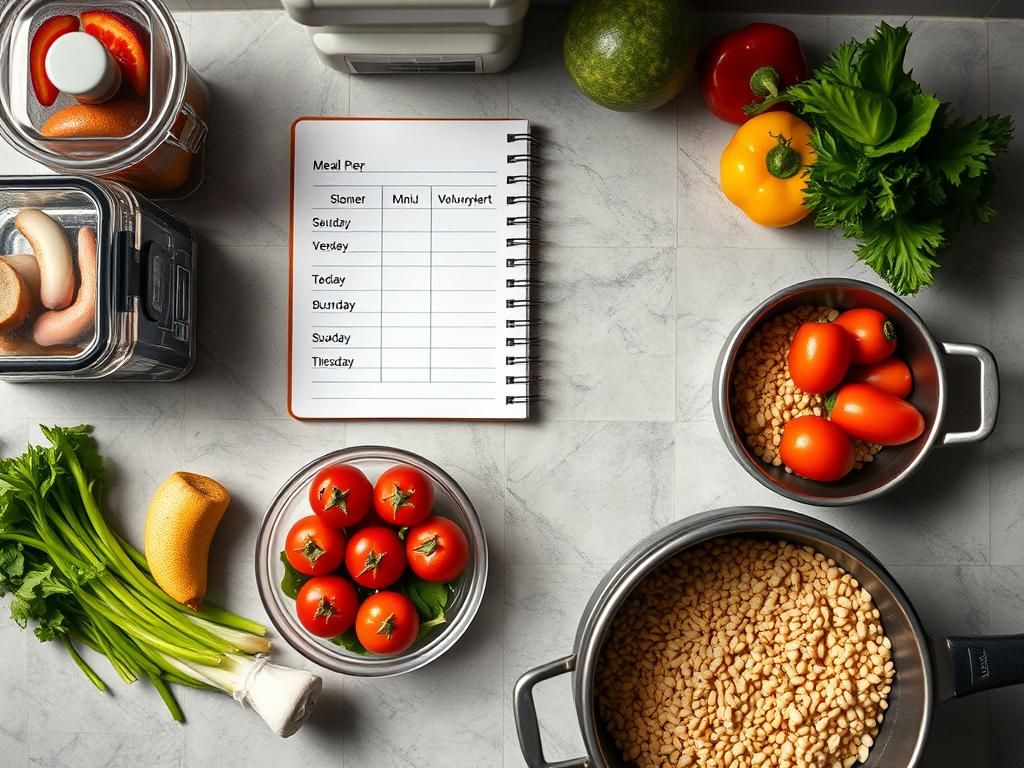
Meal planning doesn't need to be complicated. A clear weekly routine saves time, reduces waste, and makes healthy eating easier. Below are practical steps you can use right away.
Start with a simple framework
Decide how many meals you need and which nights are busiest. Use that pattern every week so planning becomes automatic.
Build your plan in three parts
-
Core proteins and grains
Pick two or three proteins (chicken, beans, tofu) and one or two grains (rice, quinoa). Cook larger batches to mix and match through the week.
-
Vegetable rotation
Choose a few seasonal vegetables. Roast or steam a big tray to use as sides, in salads, or in wraps.
-
Simple sauces and staples
Keep a small set of sauces, dressings, and spices to change flavors without extra effort.
Practical tips for execution
- Write one shopping list based on the weekly plan and stick to it.
- Batch cook one protein and one grain on a free evening to shorten daily prep.
- Prep ingredients (chopped vegetables, portioned snacks) so assembly takes minutes.
- Repurpose leftovers into salads, bowls, or omelets to avoid waste.
- Keep a running list of quick meals you enjoy and rotate them.
Keep it sustainable
Start small: plan for three to five meals a week and expand when the routine feels natural. Track what works and simplify choices rather than adding complexity.
Consistent, minimal steps deliver the biggest time savings. A short planning habit each week turns meal prep from a chore into a manageable routine.