
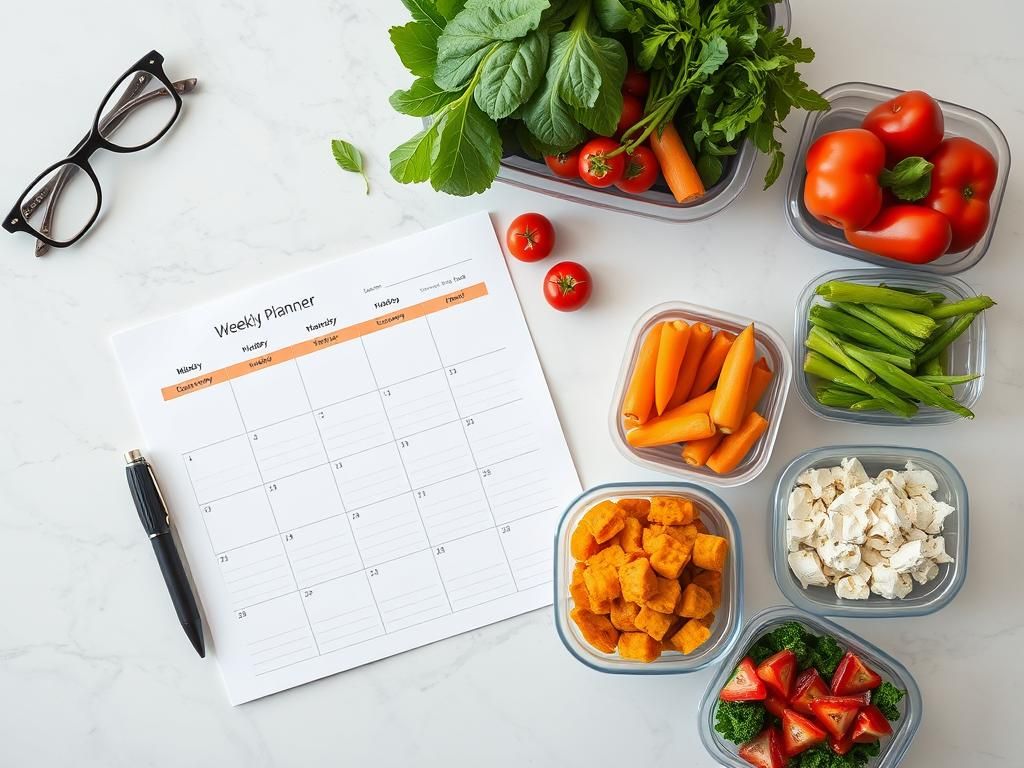
Meal planning reduces stress, saves money, and helps you eat more intentionally. This guide gives a clear, step-by-step approach you can adapt to any schedule or household.
Core principles
Start with a realistic plan that fits your time and taste preferences.
- Set a planning time: 20–30 minutes weekly.
- Inventory your fridge and pantry before you make a list.
- Build meals around versatile ingredients.
Weekly workflow
A simple routine keeps planning manageable.
- Choose 3–5 main meals and 2 flexible options (leftovers, quick bowls).
- Create a single shopping list grouped by store section.
- Prep one or two components (grains, roasted vegetables, proteins).
Practical prep tips
Small habits multiply savings in time and waste.
- Batch cook base ingredients and portion them.
- Use clear containers and label with dates.
- Repurpose leftovers into new meals to avoid repetition.
Adjusting by lifestyle
Adapt the framework below to match priorities and resources.
- Busy professional: focus on 20–40 minute dinners and frozen backups.
- Family: double versatile recipes and involve kids in prep.
- Solo cook: portion and freeze singles to reduce waste.
- Special diets: plan core staples and rotate approved recipes to keep variety.
Start small, refine what works, and keep a short list of go-to meals. Consistency matters more than perfection.
Tags
Life Hack