
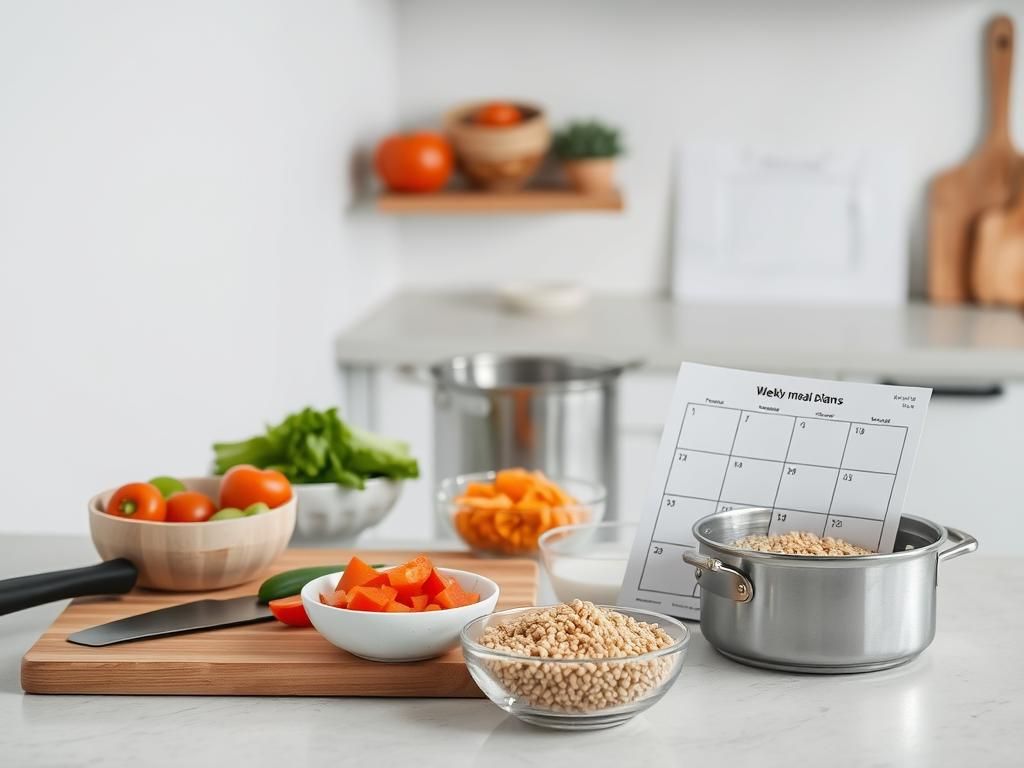
Why meal planning matters
Meal planning reduces daily decisions, saves money, and makes it easier to eat balanced food. A simple routine is more sustainable than a perfect plan.
Begin with a short weekly outline
Spend 20–40 minutes once a week to choose meals and build a shopping list. Keep the plan realistic for your schedule.
Step by step routine
Pick 3 dinner templates you enjoy (protein + veg + grain).
Choose 2 breakfasts and 2 lunches you can repeat or rotate.
Identify 1–2 snacks and a flexible leftover night.
Create a grocery list grouped by store sections.
Batch cooking and simple prep
Cook a grain and a protein base (rice, quinoa, roasted chicken) to mix across meals.
Wash and chop vegetables for quick use: salads, stir fries, omelets.
Use clear containers and label with date to reduce waste.
Pantry staples to keep on hand
Olive oil, canned beans, canned tomatoes, whole grains, basic spices, nuts or seeds.
Quick plate template
Fill half the plate with vegetables, one quarter with lean protein, and one quarter with whole grains or starchy veg. Add a healthy fat as needed.
Final tips
Start small, review what worked each week, and swap one new recipe at a time. Consistency beats complexity.