
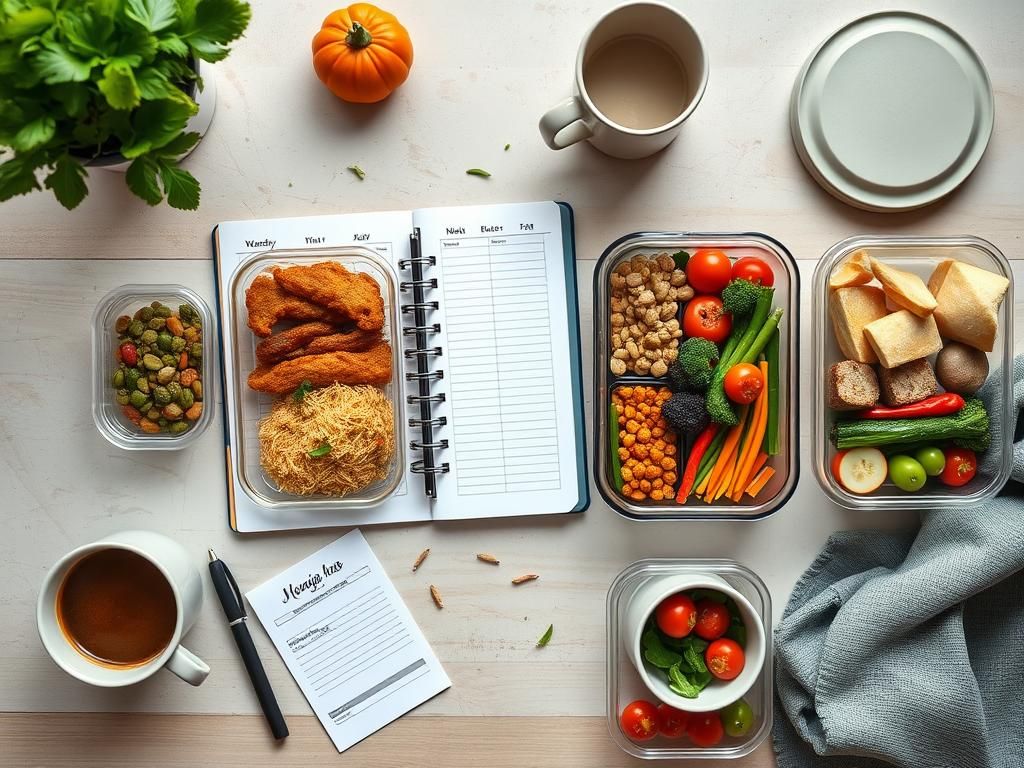
Meal planning becomes useful when it is simple, repeatable, and fits your schedule. This guide gives a clear framework you can adapt in minutes.
Simple weekly structure
Divide the week into repeatable blocks: breakfasts, lunches, dinners, and snacks. Assign a theme for 2–3 nights (one-pot, salad bowls, pasta) to reduce decision fatigue.
How to start
Set a goal: how many home-cooked dinners you want and any dietary constraints.
Do a quick inventory: note perishables and planned leftover days.
Choose 3–4 core recipes you can rotate and add simple sides.
Plan one batch-cook session (grains, roasted veg, proteins) and one flexible night.
Sample weekly plan
Monday — one-pot dinner; save extras for Tuesday lunch.
Wednesday — grain bowl using prepped grains and roasted vegetables.
Friday — easy protein night; try a new recipe or takeout substitute.
Shopping and batch work
Write a list from your plan and group items by store section.
Batch prep staples: cook a pot of grains, roast a tray of vegetables, portion proteins.
Label containers with date and intended use to avoid waste.
Keep it practical
Review midweek and swap meals if needed. Keep a short list of emergency meals for busy nights and reuse leftovers creatively to save time and money.