
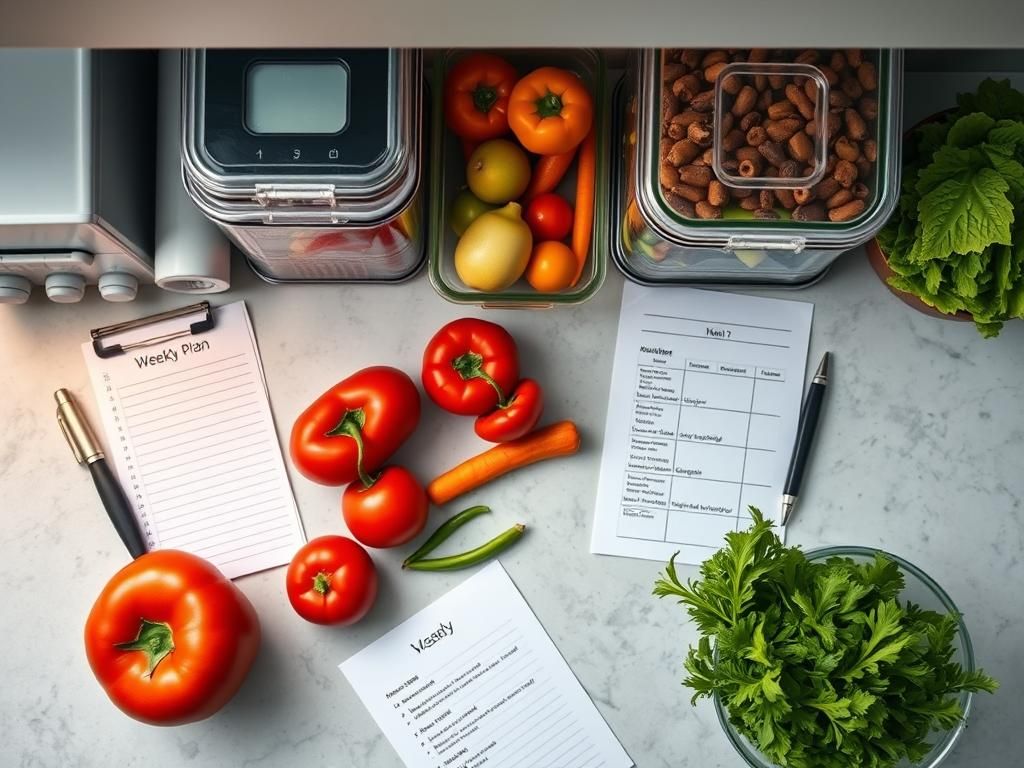
Meal planning turns stress into a short weekly task. The goal is reliable dinners, fewer last-minute runs to the store, and less food waste. Use a repeatable system that fits the time you have.
Start with a simple template
Choose one framework you can repeat each week. A template reduces decision fatigue.
- Monday: Quick one-pan or sheet pan meal.
- Tuesday: Grain bowl using leftover protein.
- Wednesday: Batch-cook soup or stew that reheats well.
- Thursday: Pasta or stir-fry with extra vegetables.
- Friday: Easy tacos, flatbreads, or a salad night.
Batch and mix
Cook once, eat several ways
Cook a few components and recombine them across meals to keep variety with low effort.
- Roast a tray of vegetables and use in bowls, wraps, and salads.
- Make a large pot of grains and portion for multiple meals.
- Prepare two proteins (one quick, one slow-cooked) to rotate through the week.
Shop and store with intention
Use a short, checked list and store ingredients for visibility and longevity.
- Write a grocery list from your template plus staples running low.
- Store herbs in water, use clear containers for leftovers, label with date.
- Freeze portions of cooked meals to avoid midweek decision pressure.
Small habits that save time
- Set 20–30 minutes on a weekend to plan and shop online if possible.
- Use leftovers as building blocks, not the whole meal every time.
- Keep a running list of meals your household actually eats and rotate those.
Start with one template and one weekly cook session. Adjust portions and recipes over a few weeks until the routine fits your schedule. Consistency beats complexity.
Tags
Life Hack