
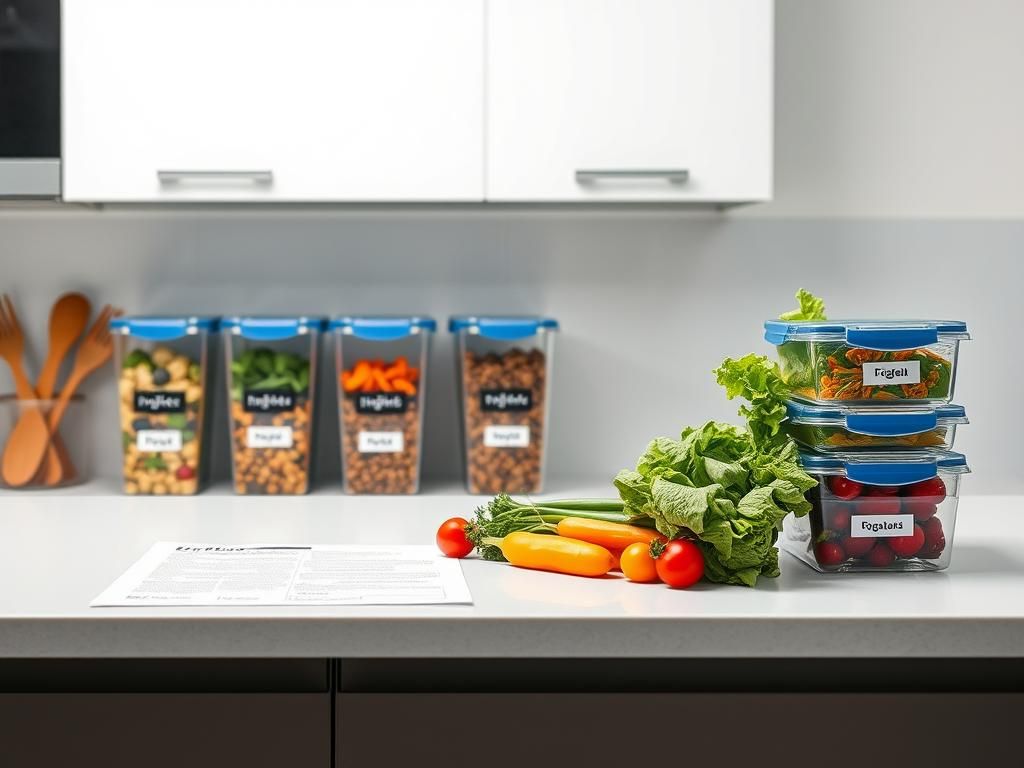
Meal planning reduces daily decisions and makes cooking predictable. This simple, practical approach helps you save time, eat better, and avoid last-minute stress.
Start with one planning session
Set aside 30–60 minutes each week to map meals, check your fridge, and list groceries.
- Inventory: note proteins, grains, produce, condiments.
- Choose 2–3 main proteins and 3–4 supporting sides.
- Assign meals to days based on your schedule.
Batch cook smart components
Cooking components is faster than full meals. Prepare versatile items you can mix and match.
- Proteins: roast chicken, baked tofu, or pan-seared fish.
- Grains: rice, quinoa, or pasta batches.
- Vegetables: roast a tray for sides and bowls.
- Sauces and dressings: keep small jars for flavor shifts.
Storage and reheating
Use clear containers and label with dates. Cool food before sealing and reheat thoroughly. Plan two "fresh" nights to use up perishable produce.
Simple weekly template
- Monday: Grain bowl (grain + protein + roasted veg + sauce)
- Tuesday: Leftover remix (wrap or salad)
- Wednesday: Quick pasta with veg
- Thursday: One-pan protein + veg
- Friday: Homemade pizza or sheet-pan night
- Weekend: Fresh-cooking or meal out
Start small, repeat what works, and adjust portions to your household. Over time you will spend less time planning and enjoy calmer evenings.
Tags
Life Hack