
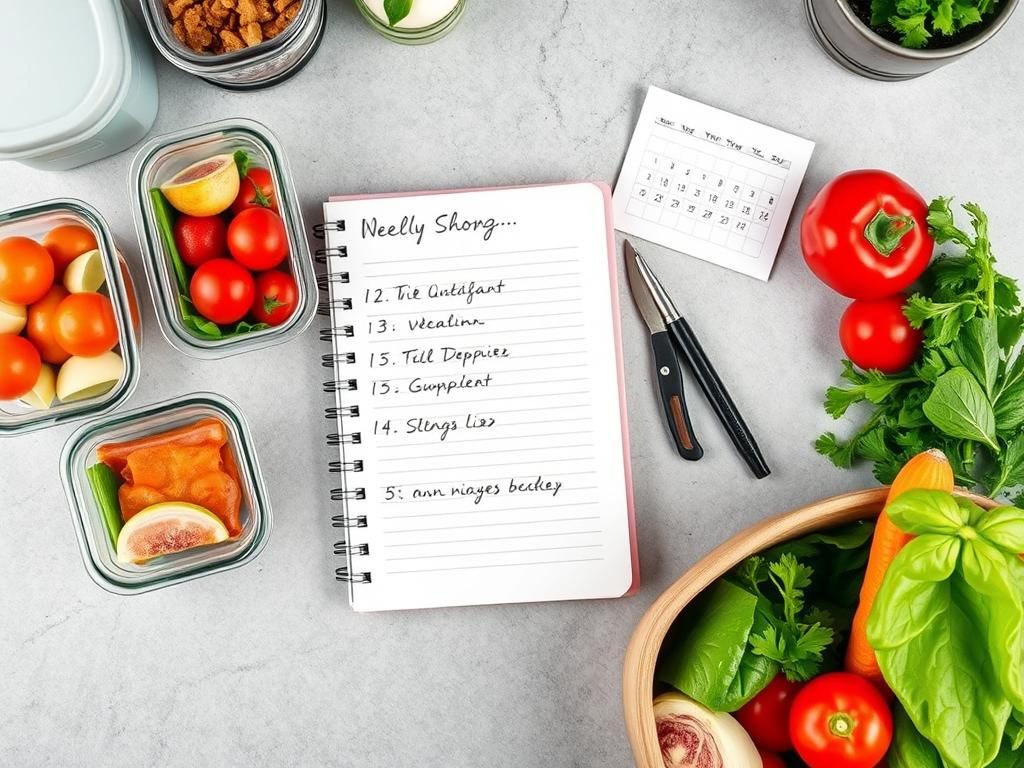
Meal planning makes weekdays less stressful and reduces waste. This guide breaks the process into simple, repeatable steps so you can eat well without extra effort.
Start with a clear inventory
Check your fridge, freezer, and pantry before you plan. Note proteins, grains, and produce that need to be used soon.
Set a simple framework
Choose a planning horizon (3 days or 7 days) and a structure you can repeat each week.
Basic framework example
- 2 quick dinners (30 minutes or less)
- 2 batch-cook meals (leftovers for lunches)
- 1 flexible meal (use what’s left)
- Weekend recipe or takeout
Create your shopping list and prep plan
Group items by store section and plan one 60–90 minute prep session after shopping.
- Wash and chop vegetables for the week.
- Cook a grain and a protein that store well.
- Portion lunches into containers so grab-and-go is easy.
Keep it flexible
Swap proteins or sides when plans change. Use a small list of favorite base recipes you can remix.
Review and refine
At the end of the week, note what worked and what was wasted. Adjust portions and recipes to reduce effort and cost over time.
Consistent, small habits in planning and prep will save time and make meals more predictable. Start with one simple framework and build from there.